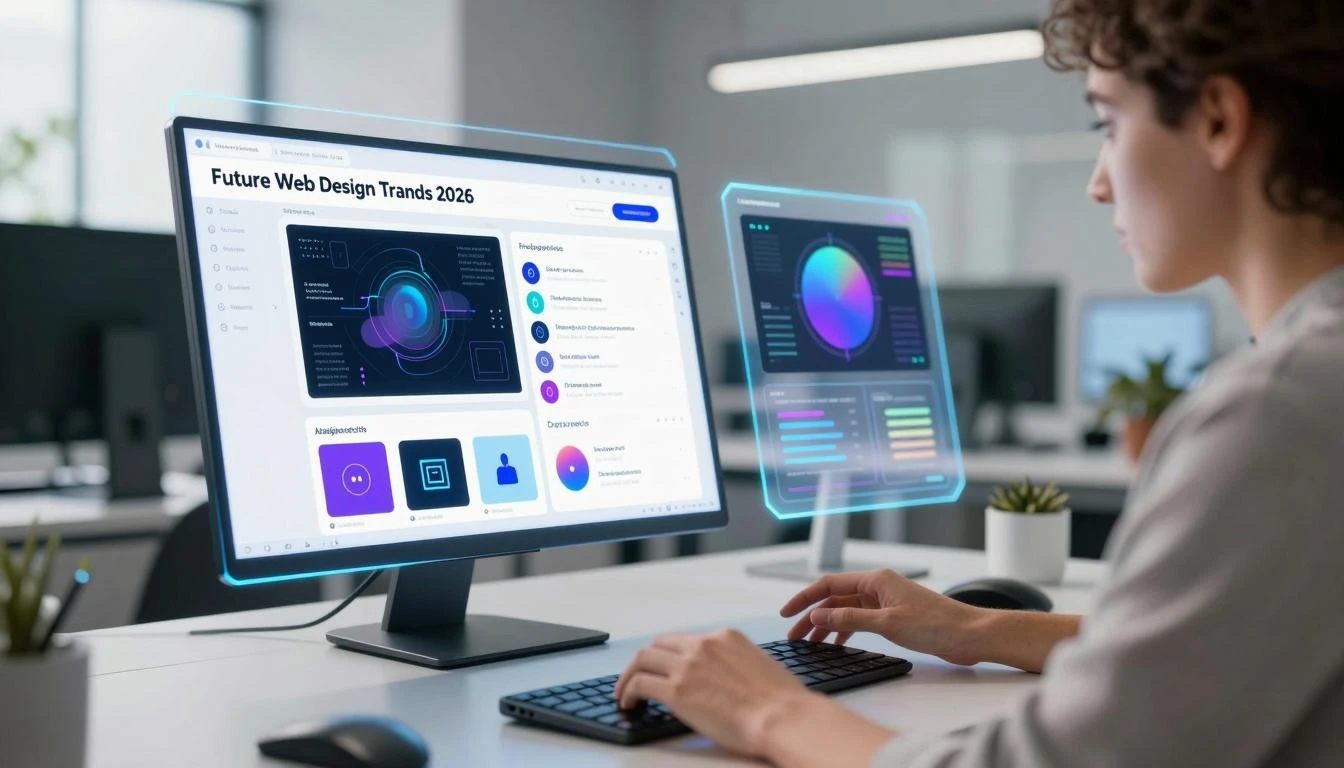
Future Web Design Trends 2026
Some websites still look impressive at a glance, yet feel clumsy the moment someone tries to use them. That mismatch is exactly why modern design is shifting so fast. In 2026, the strongest sites are the ones that feel intelligent, responsive, and quietly efficient, because users now expect design to work as hard as it looks. Google’s 2026 Search updates also point toward a more agentic, personalized search experience, which means website design has to support discovery and action more smoothly than before.
That is where Web Design Trends 2026 becomes more than a headline and starts behaving like a practical strategy. If the goal is to win attention, keep users engaged, and align with search intent, the page has to feel clear, fast, and genuinely useful from the first scroll. Google still emphasizes helpful, people-first content, while Core Web Vitals continue to measure loading performance, interactivity, and visual stability as part of the search and page experience picture.
AI Powered User Experience Design
The smartest websites in 2026 do not just present information. They respond to it. AI-powered interfaces are moving from novelty to necessity, especially as Google pushes more personalized and agentic experiences in Search. That shift makes modern web design innovation feel less decorative and more operational, because the best websites now guide people toward the next useful step instead of making them hunt for it.
Personalized website interfaces
Personalized website interfaces are becoming the backbone of stronger engagement. Returning visitors may see different recommendations, different content priorities, or faster paths to the page they actually need. That matters because personalization reduces friction, and friction is usually where conversions quietly die.
Predictive user interaction systems
Predictive user interaction systems make the experience feel almost intuitive. Think smarter search suggestions, adaptive menus, and forms that anticipate the next move instead of waiting for extra clicks. Jakob Nielsen’s work still lands here with uncomfortable accuracy. As he puts it, “A snappy user experience beats a glamorous one,” because speed and flow shape how people feel about a site long before they notice the visual details.
Smart content recommendations
Smart content recommendations are one of the easiest ways to keep users moving without feeling pushy. A related article, a matching service page, or a tailored next step can help visitors stay inside the same intent path. That is also where long-tail discovery improves, because the site starts answering the next question before the user has to ask it.
Modern Visual Design Innovations
Visual design in 2026 is getting sharper, cleaner, and more intentional. The loud, overloaded homepage is losing ground to layouts that create focus and credibility fast. Google’s Material 3 Expressive direction reflects that movement, showing how modern interfaces are leaning into stronger hierarchy, more expressive components, and cleaner structure without losing usability.
Minimalist futuristic layouts
Minimalist futuristic layouts are popular because they reduce noise while still feeling premium. They rely on spacing, typography, contrast, and visual rhythm instead of clutter. NNGroup has long noted that design trends shift, but users still judge credibility based on organization, clarity, and perceived quality.
Immersive scrolling experiences
Immersive scrolling experiences can make a site feel cinematic, but only when they support the story instead of hijacking it. Smooth section transitions, layered reveals, and motion-based storytelling can make content easier to absorb when used carefully. The point is not to impress for three seconds and confuse for the next thirty. The point is to guide attention with elegance.
Interactive 3D visual elements
Interactive 3D visual elements are becoming more common in product pages, portfolios, and branded landing pages. They can create depth, memorability, and a stronger sense of realism, especially when users need to understand an object or concept visually. Still, the best 3D elements are the ones that stay light, helpful, and fast.
Performance and Accessibility Optimization
A beautiful site that loads slowly or excludes part of its audience is not future-ready. Performance and accessibility now sit at the center of design decisions because they shape both search visibility and user trust. Google recommends strong Core Web Vitals for search success, and W3C’s WCAG 2.2 still frames accessibility around perceivable, operable, understandable, and robust experiences. That combination is basically the web saying, Do better.
Mobile first responsive design
Mobile-first responsive design is no longer optional. It is the baseline. Most users interact with websites on phones first, and responsive design helps the content stay readable, usable, and consistent across devices. Anna Kaley of Nielsen Norman Group puts the principle into plain language, “The system should speak the users' language.” That idea matters just as much on a small screen, where every unnecessary choice feels heavier.
Fast loading web architecture
Fast-loading web architecture is one of the biggest ranking and retention levers left. Google’s documentation makes it clear that Core Web Vitals measure real-world loading, interactivity, and visual stability, and that good results support both Search and user experience. NNGroup’s research says it bluntly too, “A snappy user experience beats a glamorous one,” because people engage more when they can move freely and focus on content instead of waiting around.
Inclusive accessibility standards
Inclusive accessibility standards are not just for compliance checklists. They help a site work better for everyone. WCAG 2.2 is built around testable success criteria, and that structure gives teams a practical path for improving navigation, contrast, keyboard access, and readability step by step.
Upgrade Your Website for the Future Today
The future is not waiting politely while websites stay the same. Search is getting more intelligent, users are getting less patient, and the best-performing pages are the ones that combine speed, clarity, and helpful interaction without making the visitor think too hard. That is the real shape of Web Design Trends 2026, and it is already visible in Google’s search direction, Core Web Vitals guidance, and the growing pressure to build for usefulness first.